After learning about the climate change impacts of reduced rainfall and increased heat waves, students from Woodcroft College chose to explore solutions to water wastage. The students investigated the water efficiency of different tap types at their school sensor, button, mixer and turn taps, by timing, capturing and measuring water over a 10 second period.
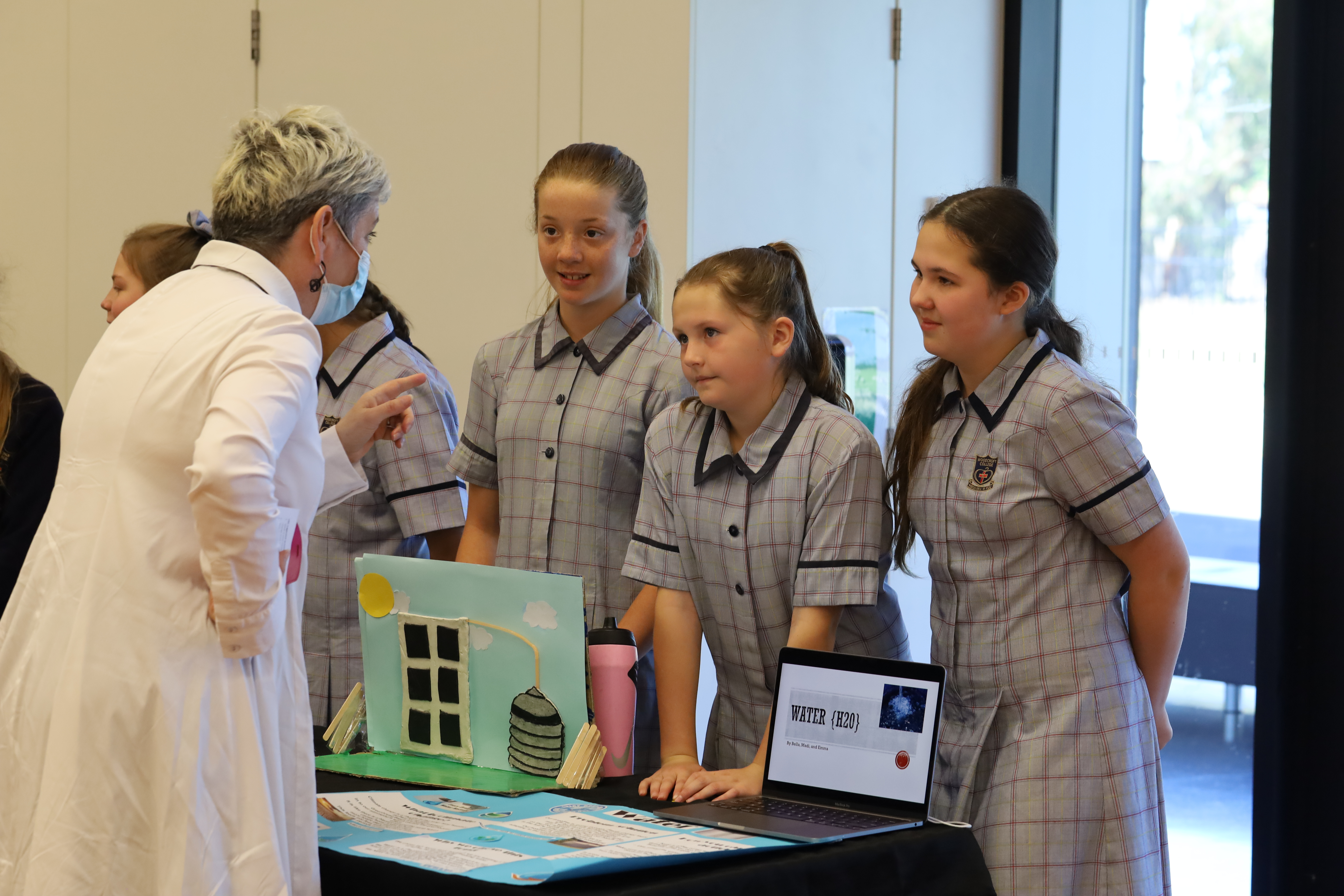
Their findings identified sensor taps as the most water efficient, using 0.7 litres, and the turn taps the least efficient, using 1.7 litres in a 10 second period. The students were concerned that the large number of students washing their hands multiple times a day for more than 10 seconds, was causing an unnecessary amount of water wastage and began forming recommendations for changes in their school. As Woodcroft College was getting ready to renovate some of the bathrooms, the students recommended that they install sensor taps as the most water-efficient option.
The students also researched water aerators, small tap attachments which dilute the water flow with air to reduce the amount used. They liked this as a solution, finding they can reduce water use by up to 60% without changing the pressure of the water. They also recommended installing aerators in sinks and showers, as a solution that students and their families could implement in their homes.
The students looked at their project from a climate change mitigation as well as an adaptation perspective. They identified that reducing domestic water consumption, could in turn reduce fossil fuel emissions through the water treatment process, when clean energy sources are not used.
Following the Climate Ready Schools Expo, the students planned to look at the costs required to implement their proposed tap changed throughout their school and consider arranging to discuss them with their school board. They have also shared the benefits of their proposed solution with younger students at their schools and their wider school community, so that they might also influence them to adopt water-saving options. The students said they really enjoyed learning about options to reduce water in response to reduced rainfall and sharing their findings and solutions with others.
- Investigated water wastage and opportunities to save water in response to the climate impacts of less rainfall and more heatwaves and fire danger.
- The students investigated the water efficiency of different types of taps in their school; sensor, button, mixer and turn taps
- They tested each of the taps by capturing and measuring the water in a 10 second tap, from each tap respectively
- They found that the sensor tap usd a 0.7L…….
- From their findings they were able to make recommendations for the school to incorporate into their planned school renovations
- They also looked at water aerators as other alternatives, which attach to the nozzle of the tap and mix air into the water flow, reducing the amount of water passing through the tap. The students found that the aerators can reduce water use by up to 60% while not affecting the pressure, and identified this as an action that families could also install them in their sink and shower taps.
- The students looked at their project from both an energy and water perspective, identifying their solution as mitigation as well as adaptation. As reducing domestic water consumption reduces the fossil fuel emissions during the water treatment process, when clean energy sources are not used.
- Following the Expo, the students planned to look at the costs required to implement tap changes throughout their school
- Looking at talking ot eh school board
- Have also shared the benefits of their solutions with younger students at school, and with their families and wider community so that they might also adopt the water-saving options.
- The students said they really enjoyed learning about water-saving options, and sharing what they learnt and their water-saving solutions with others.
We’ve been looking at water wastage and trying to save water for the future of less rainfall overall and more heatwaves and fire danger days.
Also looking at which tap is the most water saving in our school. We test the sensor tap, button tap, mixer tap and turn tap. And we found that the sensor tap in 10 seconds only used 0.7L, and that was the lowest. And the highest amount of water was the turn tap which was 1.7L and if you doubled that to the recommended time to wash your hands to 20 seconds, the turn tap was over 3L of water to use. We’re thinking that with the amount of people in our school that use the bathroom taps daily or twice a day that’s a lot of water wastage we need to fix.
We tested each of the taps for 10 seconds. We have a 10 second timer and ran each tap into a bucket. And put in a cylinder to measure how much water it used. To avoid wastage we poured it on the garden. We found that the sensor tap is the best and we’d like to implement that throughout our whole school, which our school is already starting to do in a few bathrooms, and now some renovations are happening.
We also researched something called a water aerator. Its a little thing that you can screw into the nozzle of the tap and its got these little holes which means when the water runs through it mixes air with the water to make bubbles to reduce the water use by 60% but you don’t notice any change in pressure. So it avoid water wastage from 60%. We’re thinking they could put in all taps in our school. Its also a good thing people can do at home and also in showers. Our project was both mitigation and adaptation because its a water solution, when we run out of water or have a shortage.
Its mitigation because we stop water wastage, and stops it from needing to be treated. Water needs to be treated before it goes through the tap, and to treat the water its using energy which requires burning fossil fuels if they’re not using clean energy. The less water is used, the less water that needs to be treated so the less fossil fuel emissions. So we looked at it from a energy and water saving perspective.
We’re thinking about implementing it our school, our next step is to work out the math of how much its going to cost and how many we need, and time period for that. Water aerators are also very cheap so they don’t cost a lot for you to save water.
We had this things when we’ve got the year 5 and other year 6 classes came into our class to look at what we’ve done so we got to share a lot of that and our information there with all the year 5s and 2 year 6 classes and ours. They saw our design journey for our solution and our problem. All the groups helped each other along the way. We’re thinking about the next step after working out the math of the cost and everything is talking to the school board about it to continue to implement it. We’ve already started it as a project of ours as something we want to implement in our schools. We’ve talked about our families and communities at home about as the work work we’ve been doing.
Challenges? At the start of our project we weren’t really sure about what we were doing. We got into some group disagreements without certified roles. After the third week we got on track and worked out what we wanted to do. 2 weeks after that we found out about aerators and started thinking about that.
Most exciting part? I liked explaining to people and telling them all about it. I think 2 of the most exciting parts for me was sharing what we’ve learnt and our knowledge and trying to implement it in places to make it an ability to save water. And also kind of just learning about what is happening and learning that we can actually do this and save water.
We think the school will be on board because they’re already starting to add sensor taps in quite a lot of bathrooms and even if they’re not happy with the cost we are thinking of doing a fundraiser.