Through the Climate Ready Schools program, Athelstone School students learnt about the local climate impacts of increased storm surges and sea level rise, and the flooding and erosion this can cause in coastal areas. They decided to investigate different coastal protection options as part of the program.
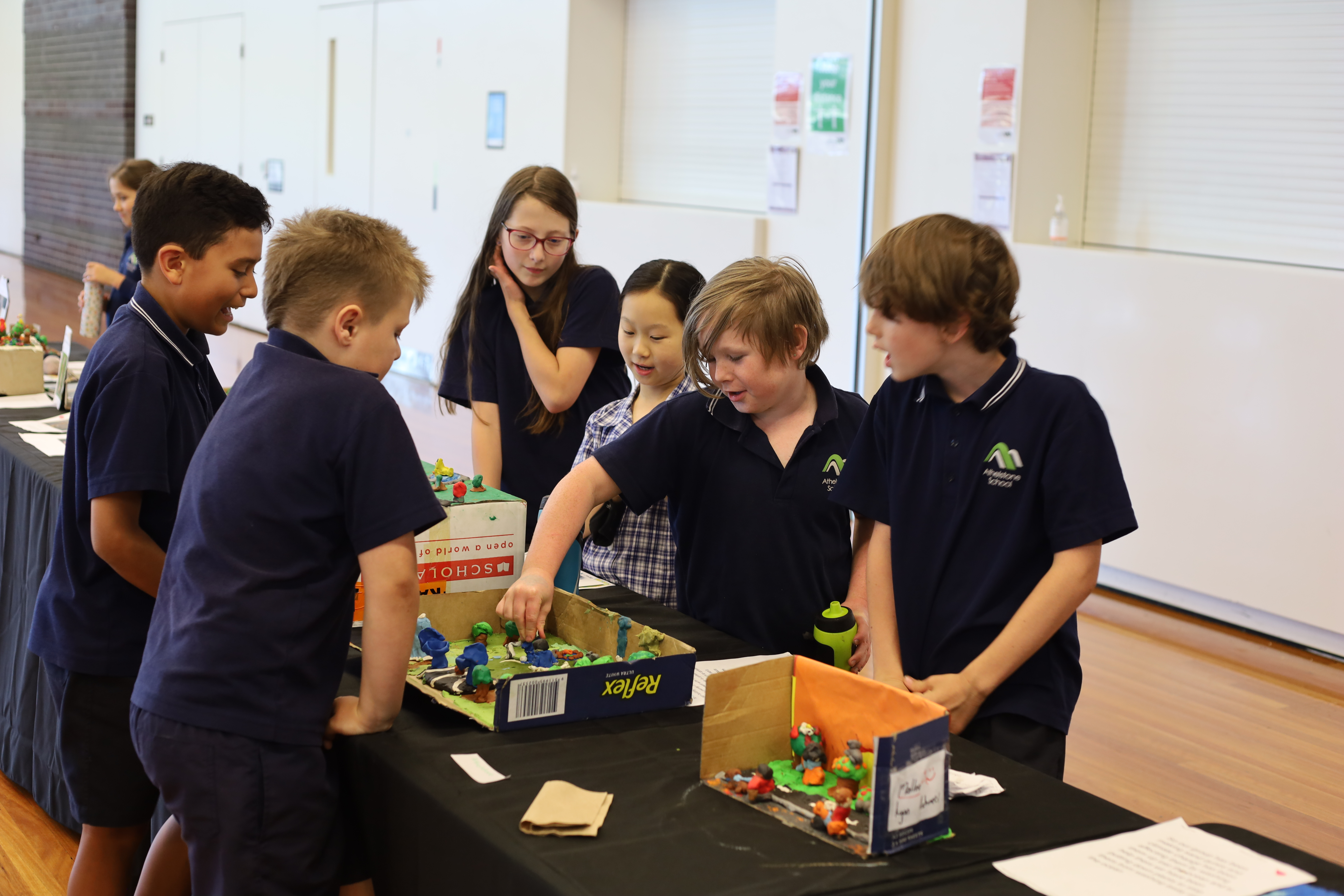
The students investigated different options, including sea walls, but didn’t like that they were not a natural or aesthetic feature. The group of students researched options online and asked their teacher and science teacher questions to better understand the problem and possible solutions.
Their proposed solution was to maintain sand dunes in flood-prone areas by planting native shrubs and grasses. They found that the roots of the plants would help to hold the sand dunes together and reduce erosion. The students outlined how this was a climate change adaptation action, in response to climate impacts, but also mitigation as the plants would absorb carbon.
The students explained the importance of the plants being native, so that they are more suited to the local conditions and more likely to survive. When asked about next steps, they suggested that their school could write letters to their local council outlining the benefits and proposing the implementation of their idea. The students enjoyed learning about climate change in the Climate Ready Schools program and believe that the whole school should be learning about climate change and what they can do about it.
Melanie from Athelstone School
We’re addressing the rising sea level.
So, we aimed to make a project with the sand dunes. We thought it was a big issue and that we should do something about it so decided to focus our project on that.
The sand dunes stop the water from coming out and flooding. And the plants on it, they’re native plants and grasses, their roots will hold the sand dune together and stop them from being eroded. And they can also absorb carbon. Adaptation and mitigation.
Haven’t seen it done anywhere but I think that probably not a good sign. Maybe it's not happening too much.
So we were thinking about solutions for this and we thought a sea wall is not natural and they look a bit ugly sometimes, so sand dunes are the perfect option because they’re not ugly and they’re natural.
We knew that its definitely not a good idea to have non-natve plants because they might not work, hold it together too much, and not good in that environment might not survive. The native plants that we know will survive and hold it together are perfect option.
Others?
I had a group; we went on google and research and asked our teacher and science teacher questions. He gave us lots of information.
Challenges? We didn’t know how we were going to make the sand dunes. The paper didn’t hold together but the plasticine didn’t stick. The plasticine is actually pretty strong and would hold up. So that was a really big challenge.
Next steps?
Something I think our school should be doing, if there's a problem and you don’t see anything happening. Who better to ask but the council or the government. Our school could do a project where we write letters to council asking for things (City of Campbelltown).
Enjoyed most?
I enjoyed spending time with my group, getting to know them better. It was really fun creating the model with them.
Thoughts on the program?
I thought the presentations were really interesting. And I think that even if the whole school doesn’t come to the expo they should still be learning about climate change. A lot of the stuff I never knew happened and I don’t think that’s very good. The whole school should be learning about climate change, all schools should be learning about climate change, and learning how to stop it.
Learning?
I actually had no idea that the sea level was rising and I didn’t know how. I thought it was because the polar ice caps are melting but its because when the water particles get hot they spread. I thought it was really interesting and I was surprised that the Duna Federico Kurbis is 1,234m tall, which is 2,845m above sea level. The information I was looking at didn’t say where that is.