Green Adelaide’s second 5-year Regional Landscape plan (2026-31) launched today will guide crucial work for Adelaide’s urban landscape board to move toward a vision of a cooler, greener, wilder and more climate-resilient city.
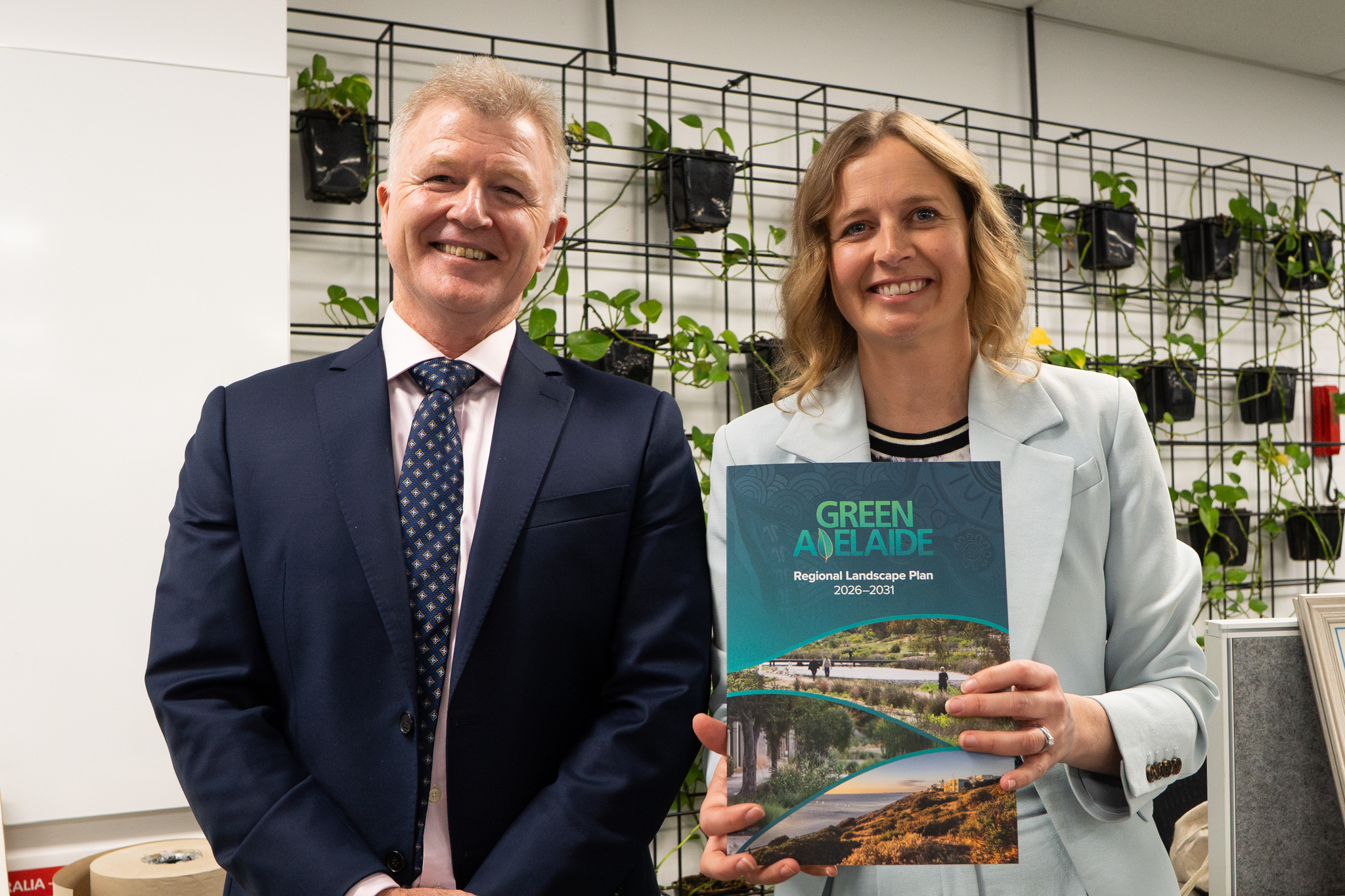
Presiding member for Green Adelaide, Professor Chris Daniels says there is opportunity for huge outcomes in Adelaide’s urban environment in the next 5 years, building on the work of the last 5 years of the organisation.
‘Whilst there have been challenges in South Australia’s natural environment in recent times the next 5 years is filled with opportunity to make meaningful progress.’ Professor Daniels said.
“Our second regional landscape plan was created with thorough feedback from Green Adelaide staff, local and state government partners and the wider community.”
‘A key theme of feedback was needing to focus on long-term environmental restoration, conservation, and enhancement that increases Adelaide’s resilience to climate change and unforeseen environmental challenges. We believe that this plan will be effective in guiding our work to prepare Adelaide’s environment for the future.” Professor Daniels said.
3 core focus areas for 2026-20231
At the heart of the plan are three focus areas: Coast and Marine, Inland Waters, and Urban Neighbourhoods. Developed through extensive consultation, these priorities reflect the unique environmental characteristics of the Green Adelaide region and provide a strategic focus for future action.
The Coast and Marine focus area recognises the importance of the region’s 225 kilometres of coastline and more than 2,100 square kilometres of marine waters within Gulf St Vincent. These environments support diverse ecosystems but face increasing pressures from climate change, urban development and population growth.
The Inland Waters focus area acknowledges the vital role waterways play in Adelaide’s dry climate. With approximately 1,700 kilometres of watercourses across the region, ongoing collaboration with councils, government agencies and community groups will remain essential to improving waterway health and resilience.
As South Australia’s only urban landscape board, Green Adelaide also has a unique responsibility to care for Urban Neighbourhoods. While urban growth presents challenges, it also offers opportunities to create greener, cooler and more liveable communities that support both people and nature.
At the heart of these focus areas are 5 enabling functions underpinning how Green Adelaide operates.
1. Catalyse on-ground action
- Invest directly in environmental projects.
- Work with landholders, community groups, government and non-government organisations.
- Support activities such as:
- Revegetation and planting
- Pest and weed control
- Species reintroductions
- Seed collection
2. Develop and maintain data and evidence
- Use monitoring and investigations to guide investment decisions.
- Undertake mapping, condition assessments and data collection.
- Share information with partners and the community.
- Support research to improve environmental outcomes.
3. Facilitate collaboration
- Bring stakeholders together to tackle complex environmental challenges.
- Build and maintain strong partnerships.
- Help plan, coordinate and deliver collective solutions.
4. Inspire nature stewardship
- Build community and partner capability through education and engagement.
- Share information in accessible and targeted ways.
- Support responsible land and water management.
- Undertake compliance activities when required.
5. Influence policy
- Provide advice on policies and planning that affect our waterways, coast, marine, terrestrial and urban environments.
- Support partner agencies with information and practical options to improve environmental outcomes.
Excitement for the future
Professor Daniels said that whilst there is no doubt there will be challenges in Adelaide’s environment, the future is bright.
As South Australia’s urban landscape board we have already achieved a lot of large-scale environmental change, like our multimillion-dollar upgrade of Breakout Creek Stage 3, that resulted in thousands of native plants being planted and creating wonderful share use trails.
“We know there’s a lot more work to do and we acknowledge that we couldn’t do it without our wonderful partners, and with them, and all of you, we look forward to creating a cooler, greener, wilder and more climate-resilient Adelaide that celebrates our unique culture.
View the full Regional Landscape Plan.