When communities come together big changes can be made – sometimes they even change the course of people’s lives. That’s exactly what happened when a southern school joined forces with an environmental organisation to protect an important place.
Read on to hear how Trees For Life (SA) and Blackwood High School used a Green Adelaide Grassroots Grant to restore Karinya Reserve.
Why is this grant project important?
Located in the City of Mitcham, Karinya Reserve is a popular community space where sporting facilities and play equipment sit alongside a protected natural environment – grey box grassy woodland.
At 10 hectares – or roughly three-quarters the size of Westfield Marion – the site is home to many local native plants and animals.
It also plays an important role connecting the Wittunga Botanic Garden and Sturt Gorge Recreation Park, allowing animals to move between these patches of urban greenspace.
The reserve is also the location of the Eden Hills Scout Group and Sturt Lions Football Club – and is right next door to Blackwood High School. Unfortunately, the high use of the site was creating some challenges.
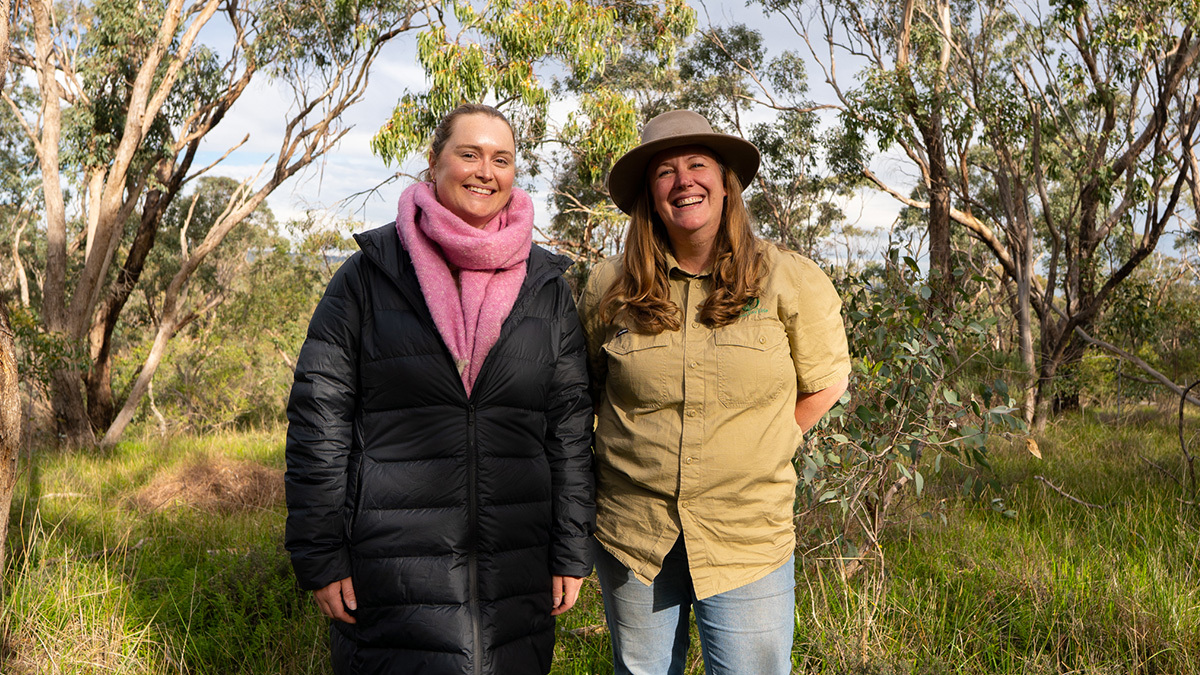
Trees For Life Regional Coordinator Tamara Horsnell says that despite the efforts from volunteers, the reserve was becoming damaged and degraded.
‘Unfortunately, we were in a situation where there was some vandalism happening repeatedly – trees being cut down, cubby houses being made.
‘So, we wanted to bring people in, educate them, get them in the bush and really show them why this area is important,’ she says.
And a Green Adelaide Grassroots Grant was just the thing to make it possible.
What is a grey box grassy woodland?
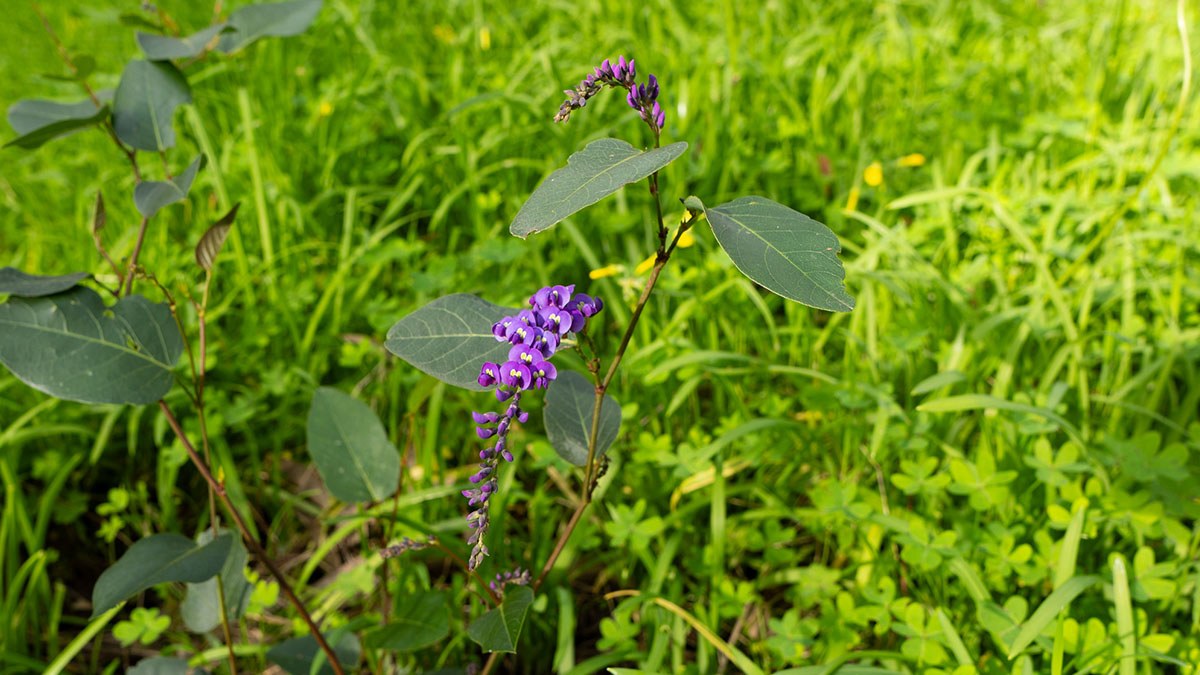
Tamara says, ‘When you come into a grey box grassy woodland, you’ll find that there’s a lot of trees, some shrubs and then a whole lot of grasses and lilies.’
‘Unfortunately, there’s only about 11 per cent of this type of ecosystem left in South Australia.
‘And it’s a really important habitat for things like kangaroos, lizards, pollinators and a whole lot of woodland birds as well,’ she says.
The main tree that you will find in a grey box grassy woodland is the grey box (Eucalyptus microcarpa).
How did the Grassroots Grant help?
The grant allowed Trees For Life to tackle some of the weeds taking over the site, while also getting the school and scout group on board with revegetation.
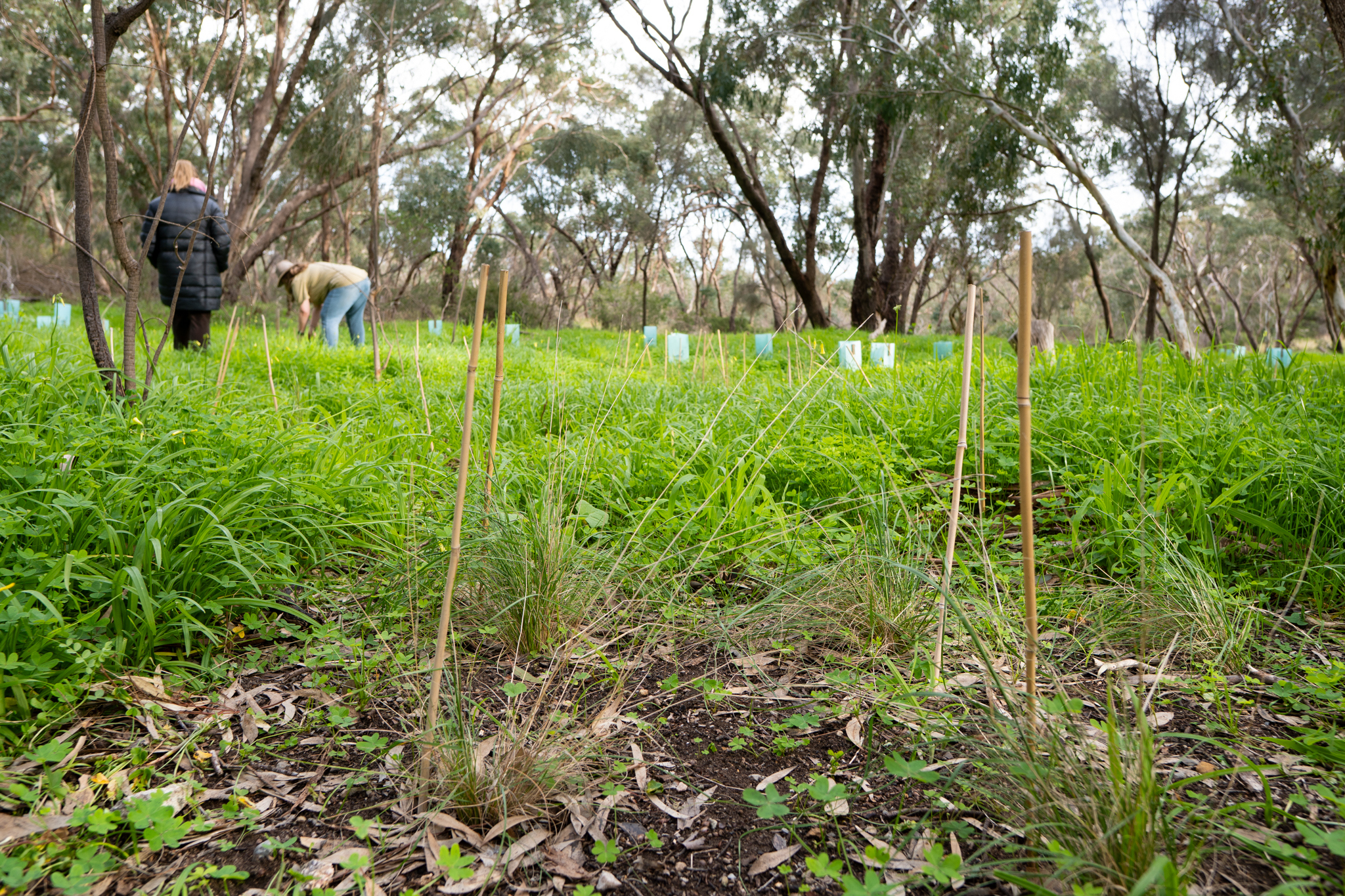
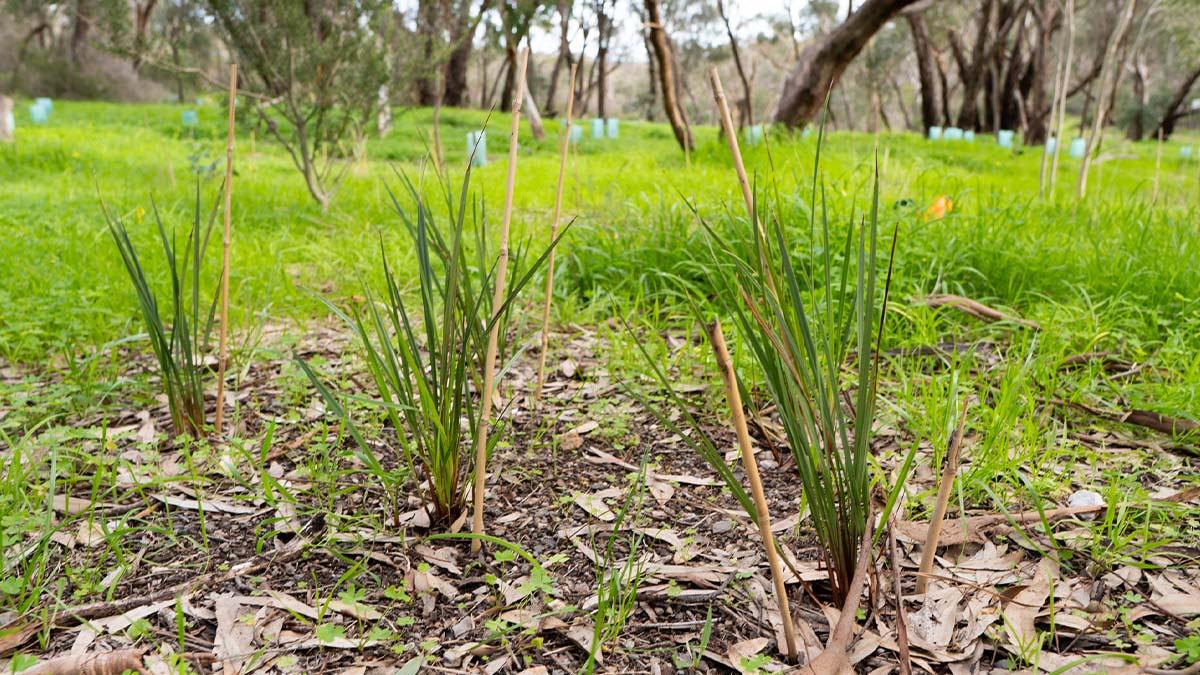
The partnership kicked off with an in-class workshop for students, then a walk-through the reserve. Finally, two planting days were held – one with the scouts and the other with the school. Between them, the team got an impressive 600 plants into the ground!
Tamara says that since the project, there has been no vandalism at the site.
However, an unexpected outcome of the project was influencing the study pathways of the students.
Blackwood High School Geography Teacher Laura Conley says, ‘I know of at least five students last year [of the graduating year 12 cohort] that chose an environmental science or management course for their preferences at university.’
Laura said that one of them told her the project helped them figure out what he enjoyed – he’s now studying environmental science and teaching.
‘The project was very beneficial to our students and the whole school community in general.
‘One of the ways it was, was to increase our students’ understanding of human impacts on the local environment.
‘Our students came away from the project with a greater understanding of how they can help, how we can live a more sustainable life, how we can look after our local ecosystems but how their choices and negative choices can have a detrimental impact,’ she says.
Do you have any words of advice for future applicants?
‘If you get told no – apply again!’ Tamara laughs.
Tamara explains that she was rejected the first time she applied but she didn’t let that deter her, instead diving deeper into what was required.
Tamara says that she realised she needed more of a community angle.
‘Getting support from groups that are working with you is crucial in showing that it’s a group project.
‘What I learnt along the way is that community engagement is a really important part of the process.
‘So reaching out to the local groups to see if they wanted to get involved and then getting them to take part in the application process as well.’
When it comes to filling in the required paperwork, she says that was ‘quite easy’.
‘There was a workshop that was offered to us that I attended, which gave me some really helpful hints on how to do my application.’
For teachers wanting to get their students outside and into projects like this one, Laura says to research opportunities and reach out to local groups.
‘We’re finding it increasingly more difficult to be able to be approved to go outside the classroom and get funding.
‘So, reaching out to local members of the community, local community groups – Tamara from Trees For Life – other organisations, do your research.
‘Tamara came out when she didn’t need to – she checked in with students, she presented, she gave us educational resources.
‘You’ll be surprised how many people are willing to volunteer their time and help,’ she says.
Find out more
Green Adelaide Grassroots Grants provide funding of $2,000 to $200,000 for local projects that contribute to a cooler, greener and wilder Adelaide.
Want to be first to know when applications open again? Subscribe to our newsletter.
In the meantime, if you’re a teacher looking to embed environmental projects into your school, check out our Sustainable Schools program.