What do bugs, bees, soil and climate data all have in common? They all hold the keys to a cooler, greener, wilder Adelaide. And they were all topics in our webinars in 2025.
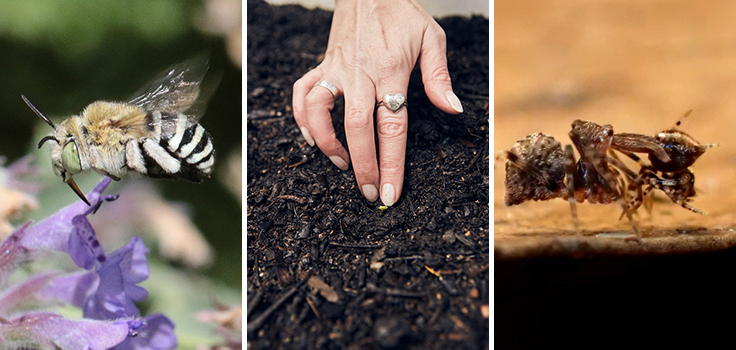
This webinar series brought together leading experts to explore critical topics, and the lessons were too good not to share.
This year we had a variety of specialists discussing everything from the value of street trees, the flight of the Australian white ibis to the transformation of the River Torrens / Karrawirra Pari.
In case you missed them, here are 5 lesson that defined our 2025 series.
1. Invertebrates – nature’s unsung heroes with Dr Jess Marsh
Think insects don’t matter? Think again. They’re small, often unseen, and rarely celebrated – but in our webinar, Dr Jess Marsh explores the fascinating lives of Earth's unsung heroes - the invertebrates - and highlighted why their survival is critical to our planet's future.
She shared how 'over 9,000 invertebrate species have likely been lost from Australia since 1788. Importantly, and dishearteningly, we also found that one to 3 species are being lost every single week and will continue to be lost moving forward.
'In the paper we coined the term ghost extinctions as a name for the 6,000 odd species that went extinct undescribed, undocumented and unrecorded.'
2. Urban Soil Biodiversity: the hidden key to healthy communities and thriving ecosystems with Dr Jake Robinson
More than just dirt – our urban soils beneath our feet might just matter more than we think. This often-overlooked world under us plays a crucial role in healthy ecosystems and our wellbeing. Hear from Dr Jake Robinson on urban soil biodiversity in this fascinating talk.
'Soils are the foundation of terrestrial life,' he explained. 'Poor soil is linked to poor plant health… which is linked to dysbiosis in the gut [poor gut health]… which is linked to more unfavourable mental health.'
3. Get the buzz on Adelaide’s native bees with Dr Katja Hogendoorn
We all know bees are kind of a big deal, but did you know you can actually give them a helping hand right in your own backyard? Yep, your garden could be a bee’s paradise with just a few simple tweaks!
Dr. Katja Hogendoorn, a senior researcher at the University of Adelaide, explored the fascinating world of Adelaide’s native bees and a special project to bring back the golden pea bee (Trichocolletes venustus) to Adelaide’s leafy green suburbs.
'Native bees are in decline and that is really unfortunate… the big issue is lack of food in the landscape.
'Most bees, the majority of native bees only go for native plants and not for introduced plants.
'By planting bee food, you don’t only do something for bees, you do something for all these vertebrates that rely on insects as food.'
4. The vital Importance of Adelaide’s native grasslands with Dr Julie Schofield
Did you know there's less than 1% of native grasslands remaining across Greater Adelaide, they're among our most endangered environments. Native grasslands are one of the most overlooked landscapes, but they are rich, complex ecosystems, home to a wide variety of species found nowhere else. Dr Julie Schofield explained why they are so important and how they can be preserved.
'Grasslands can be just as biodiverse as jungles, only much, much, much shorter.'
5. Going with the Flow: the nature of South Australia's seasonal rivers with Dr Doug Green
Seasonal patterns are influencing life in and around our wonderful rivers, but climate change is disrupting these patterns. What is being done to manage and adapt to these challenges?
Principal Hydroecologist Dr Doug Green, from the Department for Environment and Water delved into the fascinating ecology of South Australia’s seasonal rivers and the critical role natural flow regimes play in sustaining healthy ecosystems.
'The days of having a 10-year plan you set and forget are kind of done. We need to really be thinking about this as responsive plans to what the climate is telling us.'
Want to know more?
It has been a huge year for our webinars – and this is just a taste of some of the topics covered in 2025!
To watch more of Green Adelaide’s webinars, visit our Youtube Channel.
And – keep an eye out for more to come with our webinars expected to make a comeback in 2026.