Green cestrum is an emerging weed that is invading native vegetation. It is found in gardens and parks across Green Adelaide and is highly poisonous to humans and animals.
Description
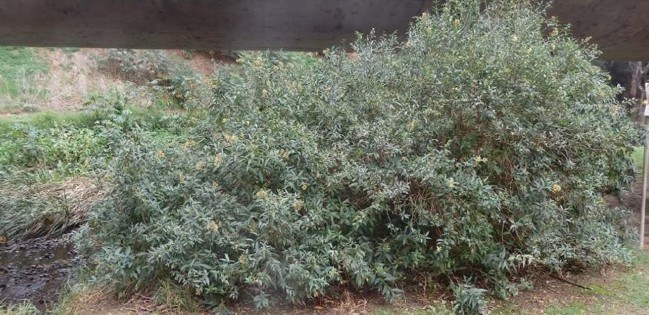
Also known as green poison berry, Chilean cestrum, Jessamine, or iodine bush, green cestrum is a long-lived woody multi or single-stemmed shrub growing up to 3 m tall. Established plants are semi-deciduous, losing some or most of their leaves during winter, rapidly producing new growth in spring.
Green cestrum have brittle pale grey-brown branches and clear sap. It has a taproot and extensive shallow dark-yellow horizontal roots that develop sucker plants away from the mother plant.
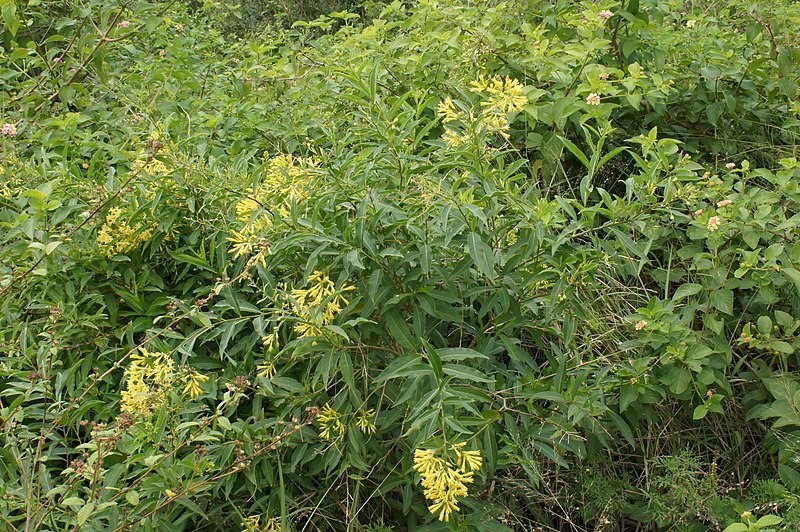

Leaves on short stalks are alternately arranged on stems, are green to dark olive-green in colour. The spearhead-shaped leaves have a strong unpleasant odour when crushed.
Flowers vary from pale to bright yellow sometimes with a green tinge, are narrow trumpet-shaped splitting into five petals at the top forming a ‘star’. Flowers form in a cluster at the end of stems, are sweet smelling at night but have an unpleasant odour during the day. Flowering usually occurs from October to May on plants at least two years old.
Fruits are a shiny egg-shaped fleshy berry, deep purple to black in colour and if crushed the berries will stain the skin. Fruits contain up to 10 dark-brown seeds that can remain dormant in the soil for many years, germinating in autumn.
Impacts
Green cestrum is an urban, environmental and agricultural weed affecting native flora and fauna that can out-compete vegetation to overrun gardens and modify the structure and composition of native ecosystems and inhibit access to waterways.
All parts of the plant (living or dead) are poisonous, especially the fruit, impacting pets and livestock. Animals may die within hours if they consume sufficient amounts of the plant.
Human consumption of green cestrum or inhalation of smoke from burning can cause liver and brain damage and can be fatal. Poisoning symptoms include elevated temperature, rapid pulse, excess salivation and gastritis. Seek urgent medical attention for all ingestions.
Distribution
Native to South America, green cestrum was originally introduced as an ornamental garden plant from where it has escaped. Although no longer believed to be sold in nurseries, it grows in older suburban and country gardens within the Green Adelaide region.
Green cestrum reproduces mostly by seed but also vegetatively by roots suckers. Seed is spread mainly by birds eating the berries and along watercourses by flood waters. It can also be spread through the movement of seed and root fragments in contaminated soil.
Green cestrum tolerates frost and grows in a wide range of soil types and rainfall. Often located in alluvial soils along waterways, it prefers open disturbed habitats where moisture is available.
Green cestrum is known to spread into parks and disturbed areas as well as invading riparian habitats, open woodlands and forest margins.
Management
Green cestrum (Cestrum parqui) is not a declared weed under the Landscape South Australia Act 2019 but is considered a new and emerging environmental weed.
We encourage control of plants where there is a risk to human health, agriculture, and biodiversity. Undertaking weed control needs to be done carefully to prevent damage to native vegetation.
Control methods
Touching the plant with bare skin should be avoided. When removing green cestrum consider covering skin with protective clothing and gloves, as every part of the plant is poisonous.
Hygiene
The best control measure to prevent spread of green cestrum is to implement good hygiene practices. Before leaving an infested area, clean equipment and vehicles to remove any soil that may contain seed or root fragments. Do not move contaminated soil or produce.
Mechanical
Grubbing or digging out small plants is effective for gardens, isolated populations or plants in sensitive native vegetation areas. Ensure roots are removed to prevent regrowth or treat with herbicide.
Large infestations may require heavy machinery. Soil disturbance should be minimised. Consider covering disturbed areas with a thick layer of mulch to suppress new weed seedling emergence.
Cutting the stump is effective to remove plant mass and prevent flowering and fruiting. Green cestrum will continue to grow if stumps are not treated with herbicide at time of cutting.
Dead plant material remains poisonous. Do not burn plants as the smoke is also poisonous. Dispose of removed plant material by bagging and placing in the waste bin or taking to a waste facility.
Chemical
Targeted spot spraying is best when plants are actively growing prior to bud burst. Ensure complete coverage of whole plant for effective control.
Both small and larger plants can be stump cut and swabbed with herbicide (weed killer) at any time.
Keep stock away from sprayed plants as they become more palatable with treatment and plants are still poisonous when dead.
Monitor control sites and treat regrowth and new seedlings.
Observations of weeds can be entered into iNaturalist, an app which can assist with identification of species.