Adelaide beaches aren’t just popular for people – they’re also home to native animals. Here’s everything you need to know about Australia’s most threatened beach-nesting bird: the hooded plover.
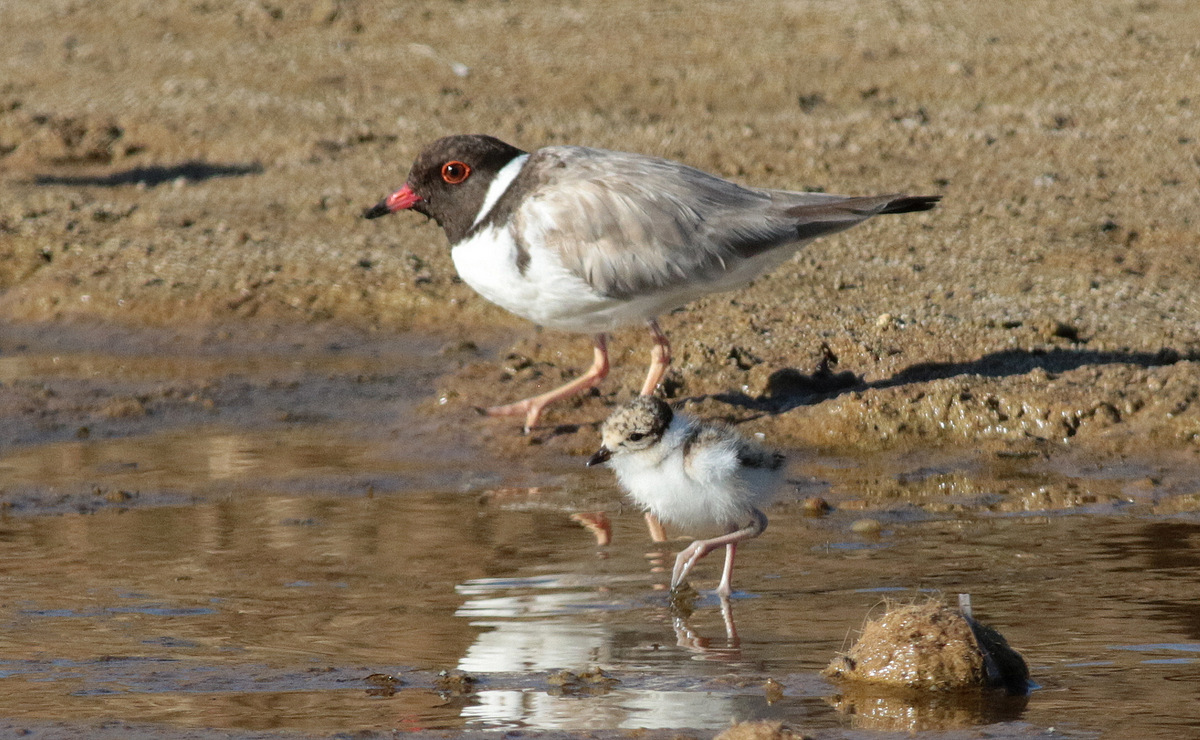
In summary:
- Hooded plovers are a small to medium sized bird found on sandy beaches in Adelaide, including West Beach, Maslin Beach, Port Willunga and Seacliff.
- They breed between July and March, nesting directly on the sand at a time when our coast is the busiest with summer visitors.
- Life on the beach is challenging for them, with off-leash dogs, seagulls, magpies, foxes and many other threats and predators.
- Hooded plover chicks can’t fly for the first five weeks of their life and need to move around the beach to find their own food, which is very dangerous for them.
- Hooded plovers on the Adelaide coast are part of the same population as the hooded plovers found on the Fleurieu Peninsula because they travel up and down the whole coast.
- There are only about 70 hooded plovers remaining on the Adelaide coast and Fleurieu Peninsula combined.
- There are only around 600 to 800 hooded plovers in the whole of South Australia, which includes populations on the Yorke and Eyre peninsulas.
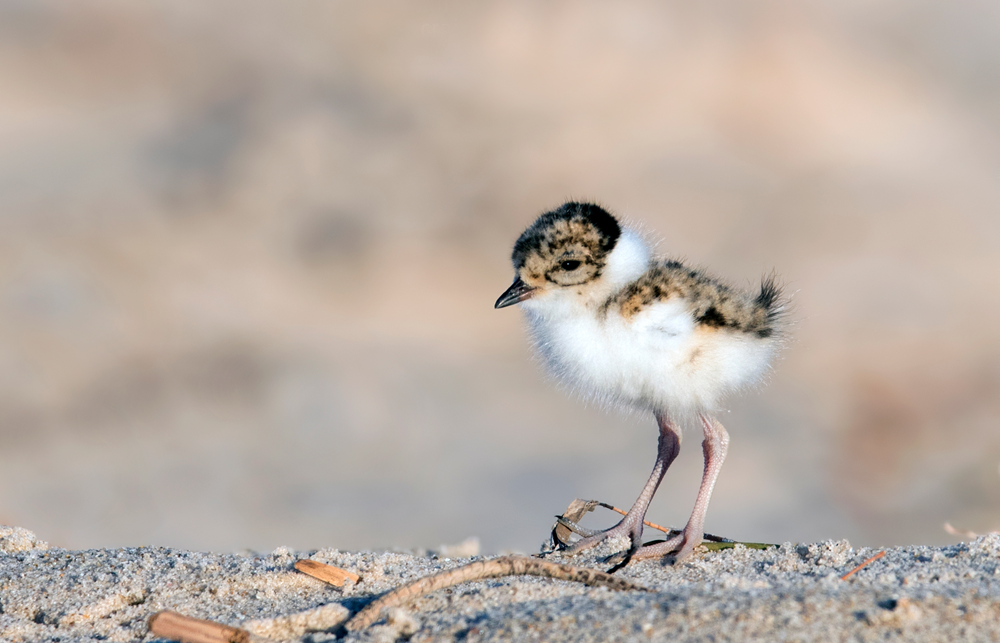
Hooded plovers, or ‘hoodies’ as they are affectionately known, are found at sandy beaches along the Adelaide coast – including West Beach, Maslin Beach, Port Willunga and Seacliff.
Our hoodies are ocean beach specialists, which means that they have no choice but to live on the coast. They never venture inland to roundabouts or school grounds like the masked lapwing they’re often confused with. In some other regions they will breed on inland salt lakes.
Beaches provide the exact habitat they need – open sandy spaces and access to the kind of food they eat – but that also presents a lot of challenges.
Everything from dogs, cats, bigger birds and foxes are out to get them. Even humans can be an unintentional threat, getting too close to their chicks or even accidentally crushing their eggs when walking on the sand, or driving on beaches.
And unfortunately, their breeding season – July to March – overlaps with the most popular time to visit a beach: summer.

How many hooded plovers are left?
There are about 70 hooded plovers on the Adelaide and Fleurieu Peninsula beaches combined. This is considered one population of hooded plovers – they don’t know where Adelaide ends and the Fleurieu Peninsula starts!
How the birds are going on the Fleurieu Peninsula directly impacts how many birds we may see in Adelaide.
The total number of hooded plovers in South Australia is estimated to be between 600 to 800 birds. This includes hooded plovers on the Yorke and Eyre peninsulas, Kangaroo Island, the Far West Coast and South East, as well as our population. Hooded plovers are also found on many of our offshore islands, such as Bird Island.
Australia has two sub-species of hooded plover: eastern and western. There’s estimated to be less than 3000 of each.
Ours are part of the eastern population, which extends into Victoria, Tasmania and to New South Wales. It once continued all the way up into southern Queensland but nowadays, eastern hoodies are mainly found on the southern coast.
Hooded plovers are only found in Australia, so we have a lot of responsibility to protect them.
Why are hoodies so particular about their beach spots?
Hooded plovers are selective about where they live and raise their families – you can probably relate! Even though there are many beaches in Adelaide, they’re not all suitable.
Hooded plovers need big, open spaces to lay their eggs, find food, shelter their chicks and flock together in a group for safety when they’re not paired up for breeding.
Some beaches have the right amount of space for hooded plovers between the sea and the sand dunes, but nowhere for chicks to feed, which just won’t work.
And other beaches might have the right food but nowhere for hooded plover parents to lay their eggs so that they don’t get washed away when the high tide comes in!

What type of beaches do hooded plovers like?
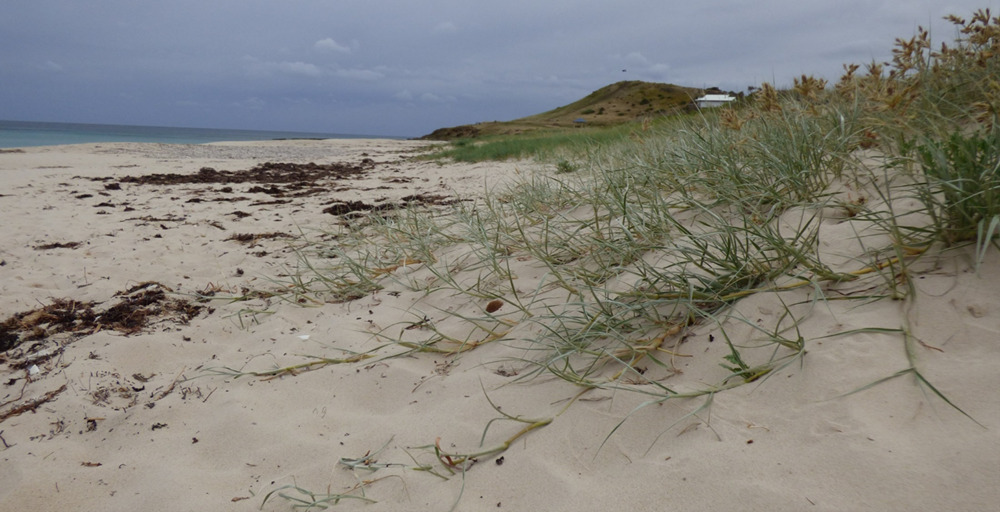
Hooded plovers often prefer beaches with low dunes. Many introduced grasses and weeds change the shape of the dunes, making them steep and cliff-like when eroded. This makes it hard for flightless chicks to run into the dunes for cover from predators or to avoid storms.
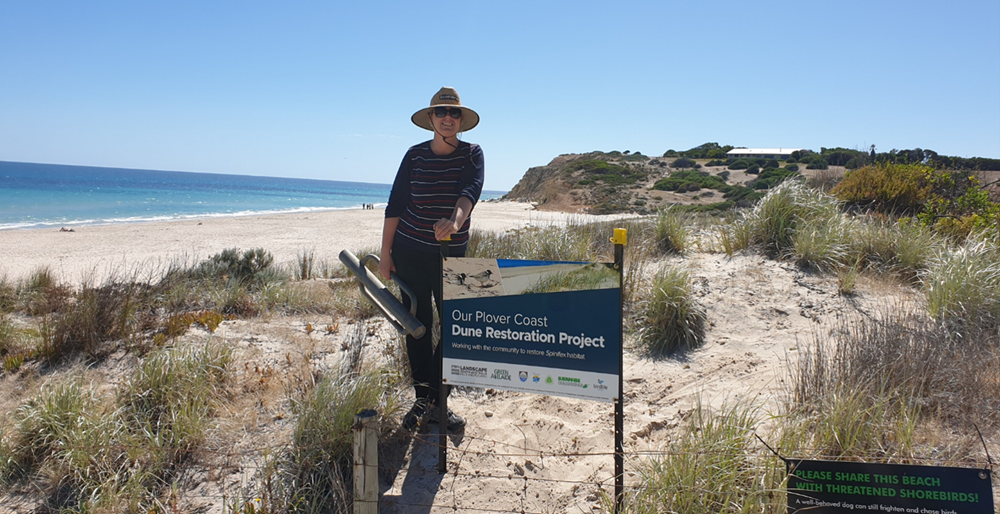
Green Adelaide and the Hills and Fleurieu Landscape Board’s Our Plover Coast project is helping to control introduced dune weeds and replace them with native spinifex. Over time, this creates the lower, less steep dunes that hooded plovers tend to prefer.
Volunteers at Green Adelaide’s Coastal Community Nurseries help propagate and grow plants for restoring our dunes.
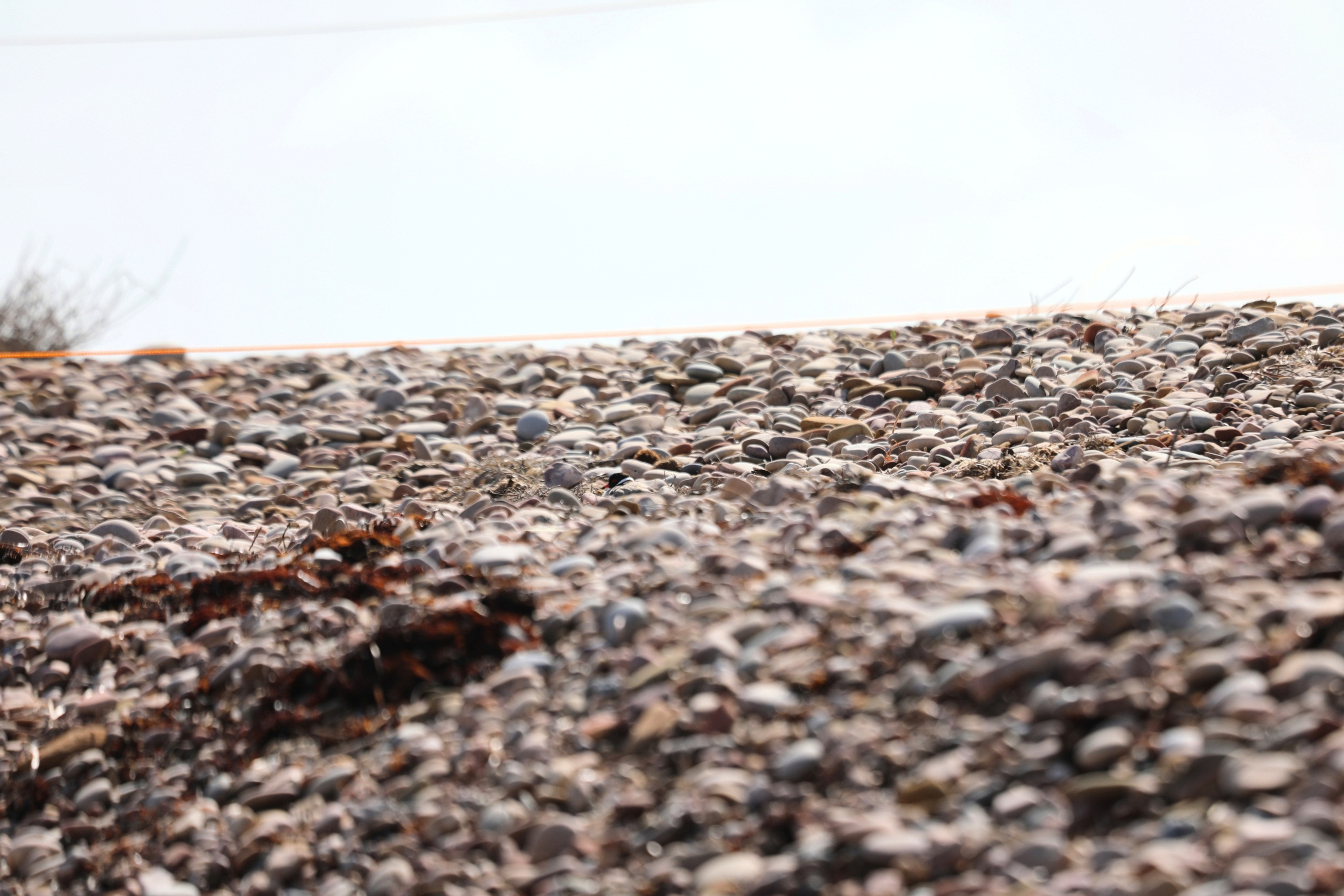
Sometimes hoodies do nest in unexpected places though – such as rocky areas at Hallett Cove or cobblestone beaches, such as at Sellicks Beach.
Where do hooded plovers live when they’re not nesting?
When it’s breeding season, hooded plovers defend their nesting territories from other plovers. After the season ends, hoodies get a bit more sociable and hang out in larger flocks.
They still live on the beach but will often gather at what is known as “flocking sites”, where they feed and rest in a group.
Our flocking sites include Semaphore, Snapper Point at Aldinga and the Torrens Outlet in West Beach.
Why is the hooded plover endangered?
Life on the beach comes with many challenges. Especially because the hoodies’ breeding season is peak beach time – July until March!
Hooded plovers nest on the dry sand, between the high tide mark (where the wet sand ends) and the dunes. This gives the adults and chicks ready access to food.

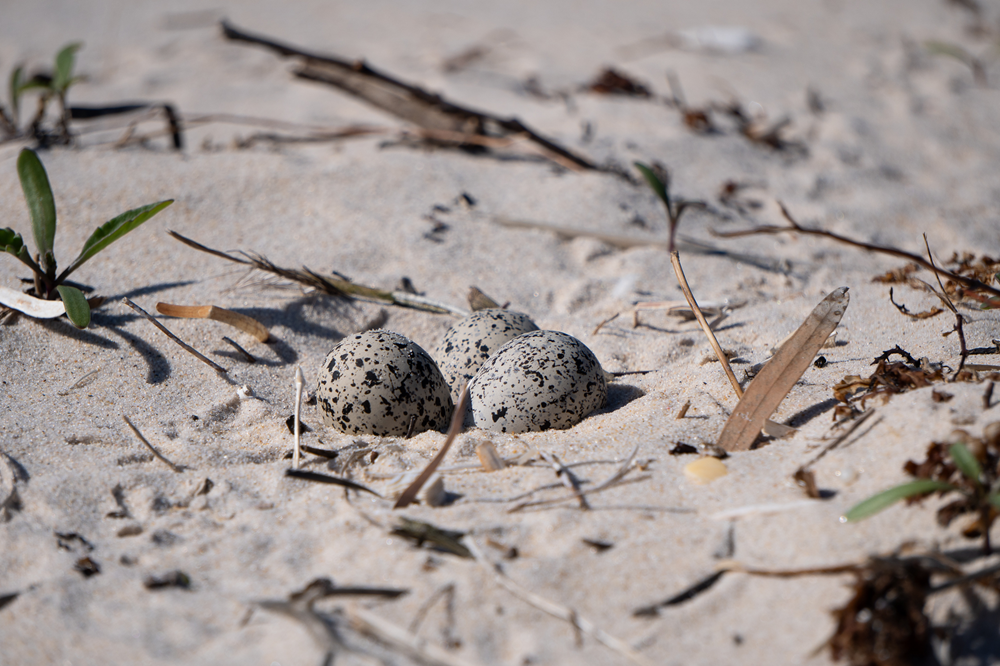
Hoodies don’t “build” nests but instead make a scrape in the sand to lay their eggs in. Their eggs blend in perfectly.
This hides the eggs from predators but also makes them hard for beach-goers to see too – and easy for them to be crushed.
When hooded plover chicks hatch they are no bigger than a 50-cent piece. They still need to get their own food though, which means travelling from safe hiding spots to the water’s edge – where they can be very visible!
Not surprisingly, these teeny tiny chicks have a lot of predators – such as magpies, seagulls, foxes and dogs. Even dogs that don’t mean any harm are terrifying for these tiny birds.
Hoodies will try to lead predators away from their nests and chicks. This can prevent eggs from being kept at the right temperature or expose chicks to other lurking predators.
Can baby plovers fly?
Nope. Hooded plover chicks can’t fly for the first 35 days of their life.
Once they can fly (known as fledging), their chance of survival is greatly increased but not guaranteed. Last breeding season, only 14 chicks made it to fledging stage.
At full size, hooded plovers are still only three times as big as they were when they hatched.

How long do baby plovers stay with parents?
Despite being super fluffy (and adorable), hooded plover chicks can’t regulate their body temperature very well. That means that for the first 10 days of their life they regularly need to snuggle with mum or dad to keep warm – *swoon*.
Snuggling isn’t just for staying warm though; it’s also important on days when the sand is too hot for little hoodies’ feet. On these days, mummy or daddy needs to brood the little plovers, while standing on wet sand, which is cooler.

What’s that wooden tent on the beach?
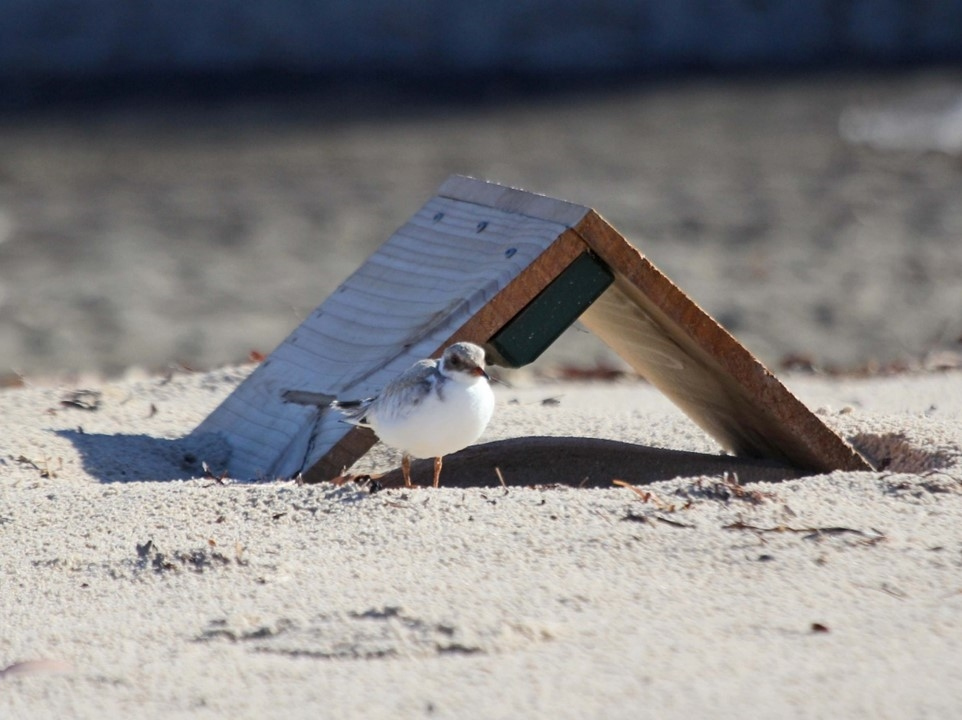
When chicks are ready to hatch, trained staff or volunteers may put out wooden A-frame chick shelters near the nest area. These provide shelter for chicks from heat, wind, rain, and predators.
Local volunteer groups and schools make the shelters to a BirdLife Australia design. Research over many years has demonstrated their success in helping chicks survive, particularly on beaches with limited natural cover.
What do hooded plovers eat?
Hooded plovers eat sandhoppers, snails, worms, shellfish, insects and marine worms.
Their tiny babies find these for themselves at the water’s edge from the moment they hatch.
How long do plover birds live for?
Hooded plovers live for around 15 years – but can be up to 20 years if they’re lucky. Of course, this is only if they survive to adult stage.
Many chicks are lost during the breeding season and never even make it to fledging.
How can I help?
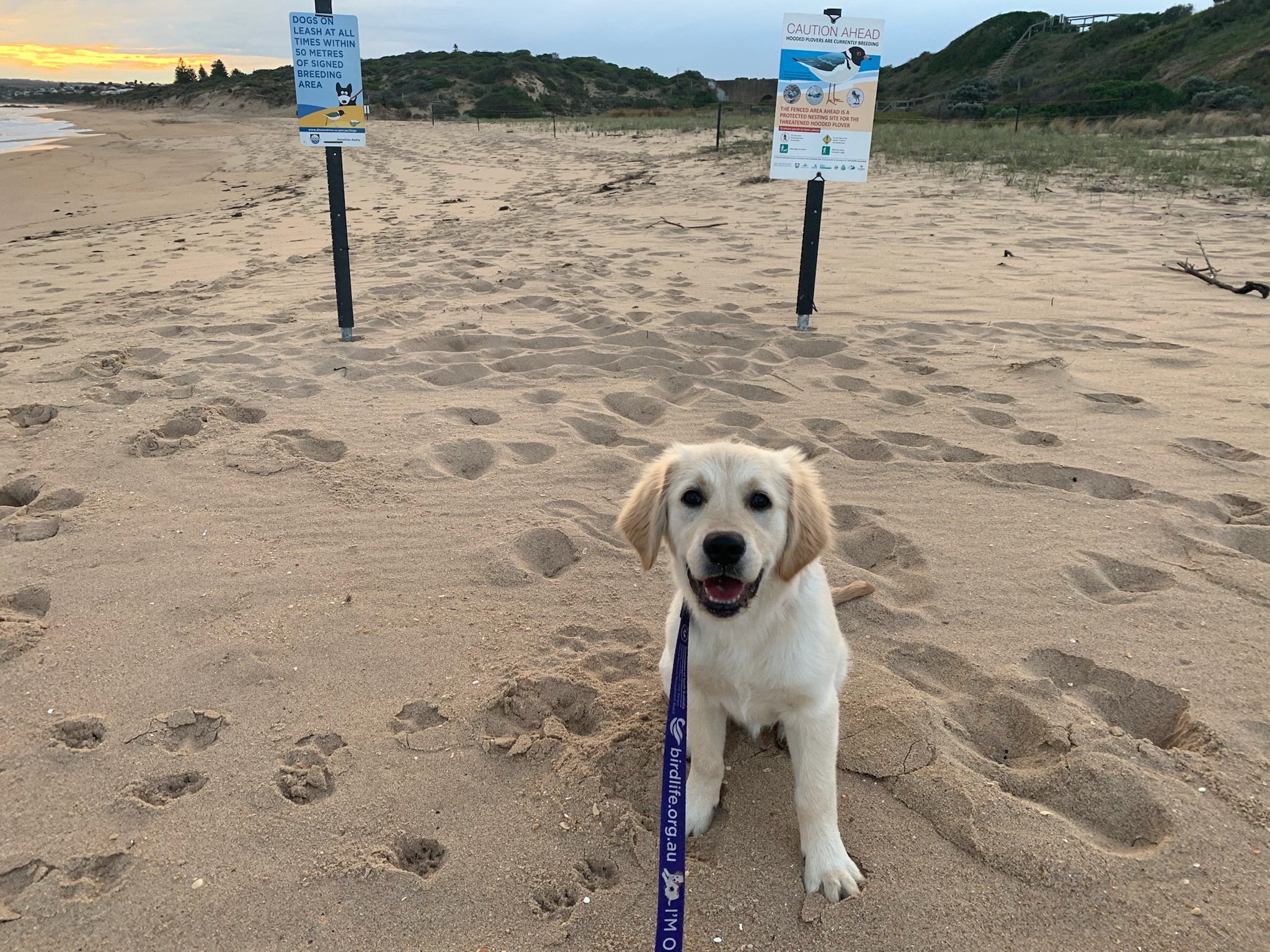
Beaches are a popular place to walk dogs but keeping them on a leash is one of the best ways to help hooded plovers.
Here are some other ways you can help these threatened birds:
- Keep an eye out for signs indicating there are nests or chicks on the beach.
- Only walk below the high tide mark (on the wet sand).
- Move away quietly when you spot hoodies on the beach.
- Become a beach-nesting bird volunteer with BirdLife Australia and play a direct role in hooded plover conservation.
- Spread the word about hooded plovers and other beach-nesting birds on the Adelaide’s coast!
Thanks for playing your part to help prevent the extinction of this species.
Bird flu
H5 bird flu is present in South Australia. If you see sick or dead birds or other wildlife, do not touch them. Avoid contact. Record what you see. Report it to the Emergency Animal Disease Hotline on 1800 675 888.
For more information, head to the Bird flu SA website.
This is an adaptation of a story published in September 2021.