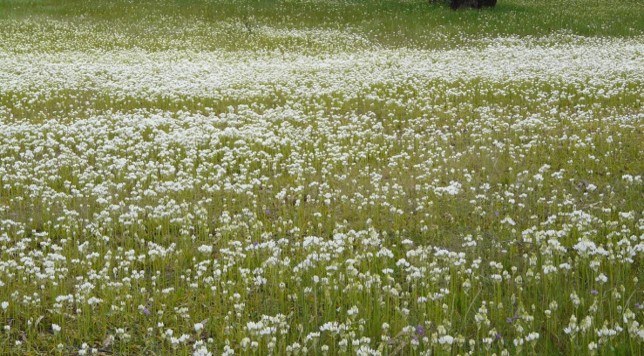
Chincherinchee is a garden plant that has become an environmental weed. It forms dense infestations, displaces native vegetation, threatens the integrity of natural ecosystems, and is toxic to livestock.
Description
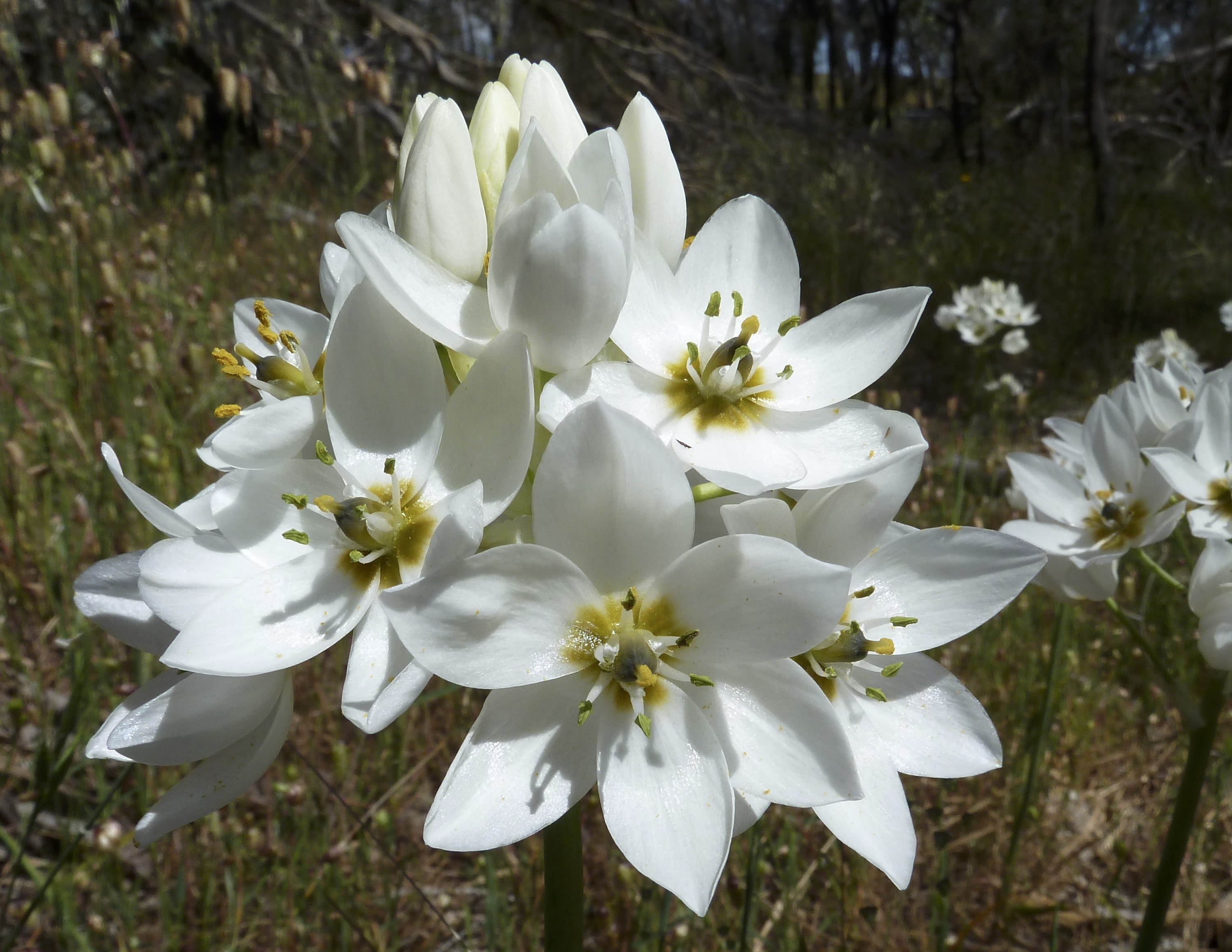
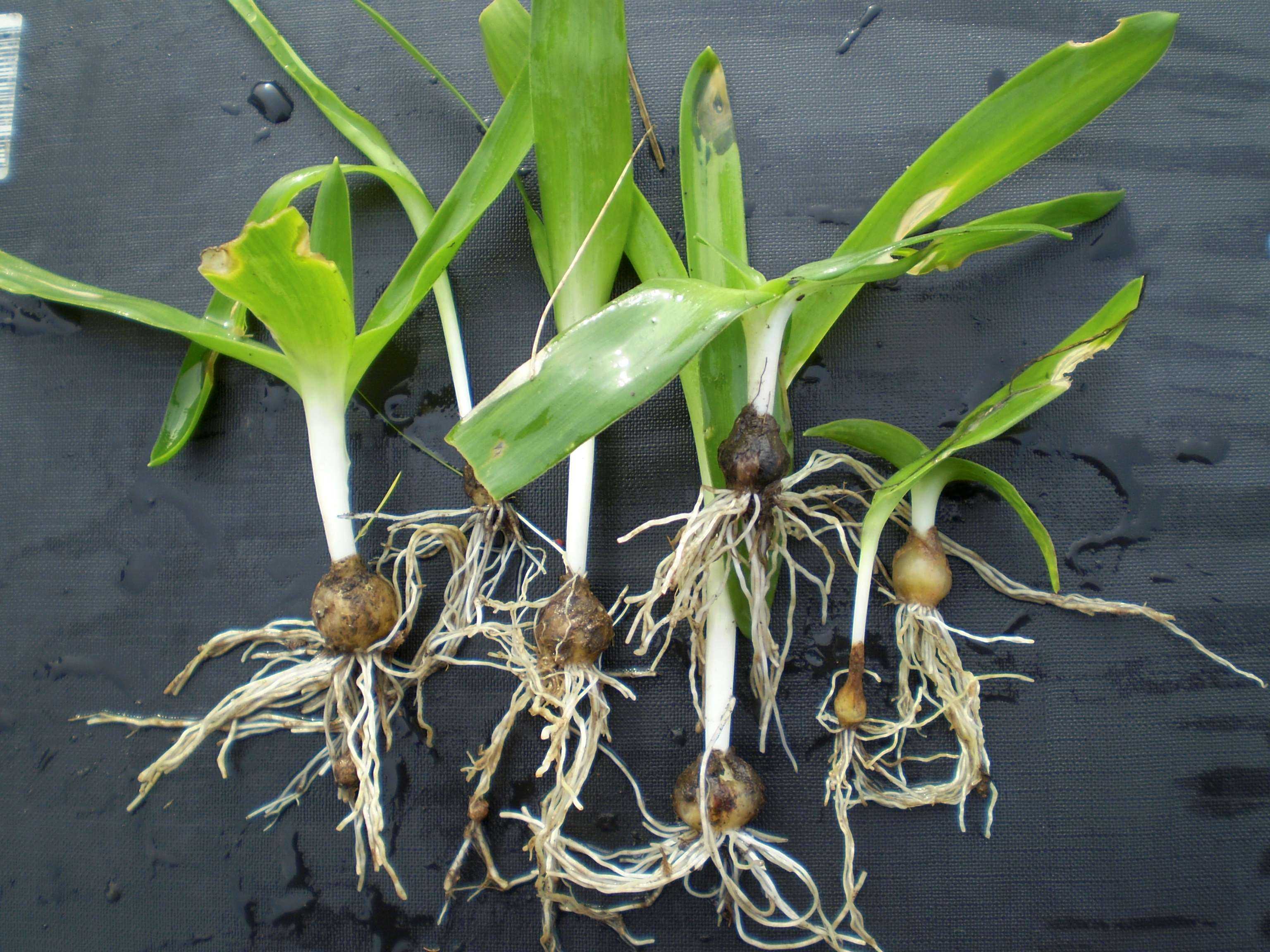
Chincherinchee (Ornithogalum thyrsoides) is a stiff upright perennial (lives on year to year) bulb up to 50 cm tall when in flower. The fleshy bulb grows to 5 cm in diameter and lays dormant underground over summer and autumn with leaves emerging in June. The succulent strappy leaves are smooth and fleshy up to 30 cm long and 2-6 cm wide with around 6 leaves per adult plant. Leaves die off in summer.
Flowering occurs in spring and early summer. Flowers form in compact clusters of 11-70 on tall straight stems. Each white flower has six petals that are 2-2.5 cm long arranged round a dark centre. Seeds are very small and black. A mature plant can produce around 500 viable seeds per season.
There are several Ornithogalum species that are commonly sold in nurseries under many common names, such as black eyed Susan and Cape lily; and spellings.
Similar species
Apart from other introduced Ornithogalum species there are a few native plant species that look similar to Chincherinchee. Native Burchardia umbellata (milkmaids) is common to woodlands and heath in the Green Adelaide region. Early spring, when they are flowering, is the best time to identify both plant species.
Impacts
Chincherinchee is highly invasive and threatens grey box grassy woodlands in the Green Adelaide area. These ecosystems are critical refuges for the nationally endangered chestnut-rumped heath wren and southern brown bandicoot.
Chincherinchee outcompetes both native vegetation and pastures leaving the ground bare and vulnerable to erosion during the dormancy stage. The plant is toxic to horses and cattle.
Distribution
Chincherinchee is native to South Africa (Cape Province) where it occupies a wide range of habitats. Around Adelaide these plants are still grown in gardens and cut flowers are used by florists. As an escaped garden plant, Chincherinchee has spread into pastures, disturbed sites and natural areas in parts of southern Australia and has been recorded in Green Adelaide’s and surrounding conservation parks (Horsnell Gully and Sandy Creek Conservation Parks, Belair National Park and Cobblers Creek and Para Wirra Recreation Parks). Some infestations have been located well away from trails in intact scrub.
The tiny black seeds can be carried over long distances by water runoff and attaching to shoes and clothing; and animals. Seed and bulbs can be moved in contaminated soil by machinery, and through illegal dumping of garden waste. Once established, populations may spread rapidly.
Management
Chincherinchee is a not a declared weed under the Landscape South Australia Act 2019, however, it is a new and emerging environmental weed of concern.
Sightings of these garden escapees to be reported, via uploading a photo of it to iNaturalist.
We encourage control of plants where there is a risk to human health, agriculture, and biodiversity. Undertaking weed control needs to be done carefully to prevent damage to native vegetation.
Control methods
Hygiene
Do not enter infested areas unless controlling plants. Thoroughly brush down clothing and clean footwear, equipment and vehicles from soil that may contain seed or bulbils before you leave the infested area.
Mechanical
Hand digging or grubbing bulbs in October/November is an effective control method. Mature plants produce bulbils along the roots, so ensure these are also collected and not left in the ground.
Grubbing or digging out of plants is effective for small isolated populations and in sensitive areas of native vegetation. Removed plants should be placed in thick, heavy duty garbage bags, double bagged and securely sealed. These can be placed in household rubbish bins.
To contain large infestations, consider brush-cutting/mowing at early flowering (prior to flower buds opening) to prevent seed set.
Chemical
Due to the plants smooth and shiny leaves, foliar herbicide (weedkiller) application needs to be applied with a surfactant to help it stick. Application after flowering is ineffective in controlling plants. A foliar herbicide application by wiping or spot spraying when the leaves are just emerging can deliver good results for small infestations and limits off-target damage of native plants.
Broad-scale spraying is not effective in sufficiently covering the succulent leaves and herbicide uptake is reduced. Blanket spraying may also kill native plants and other off target species and will leave the ground bare.
Control will need to be followed up every year until the bulbs and seed bank is exhausted to avoid re-infestation. Early intervention will save time and money.
Observations of weeds can be entered into iNaturalist, an app which can assist with identification.